I had a great time at the Homebrew Computer Club Reunion last night, which, I learned, was made possible by a Kickstarter (thank you, KS backers!)
One of the great conversations I had there was with Ted Nelson, author of Computer Lib/Dream Machines and his wife, Marlene Mellicoat. My wife and I had a wonderful time speaking with them. Ted has published a new edition of Computer Lib. It's not a reprint from scans of the original, but a new printing from the original negatives. It's as clear and sharp as the original was back when, possibly even better. It's in the same large format, as well, not scaled down for the size of paper that happens to be cheap and convenient for most books.
I was working so hard at being social last night it didn't even occur to me that I could probably have purchased a copy directly from him right then. I saw that he had a number of copies in his bag, too. It's little things like this that I always think of when people tell me how smart I am. Yeah, about some things, maybe, but about other things I'm not so much.
Nevertheless, I'm going to purchase it now, after the event. I read someone else's copy back when, having noticed it as a pillar on a bricks and boards bookshelf among a number of copies of The Fabulous Furry Freak Brothers (Fat Freddy's Cat was my favorite of the crew.) Now I'm looking forward to having a Computer Lib/Dream Machines book of my own.
If you're not familiar with Ted's work, I strongly recommend correcting that. The web could be so much more than it is, and require far less human "curation" than it does, if it hadn't turned into the mishmash mess of information without proper structure that it has become. I'd say more, but rather than reading my take on what he thinks, go to the source:
Hopefully I'll have a chance to post more about last night's event in future articles. There was so much packed into so little time that my head is still spinning from it. (They managed to recreate the atmosphere of the original meetings perfectly in that regard.)
It was great that my wife got to hear Ted speak during the formal presentation portion of the evening, too. I got to hear him speak a few times back when, he's a dynamic and engaging speaker. He makes you think about how things could be, possibilities that are better than reality. Now we have hearing Ted speak as a shared experience.
Showing posts with label Book Review. Show all posts
Tuesday, November 12, 2013
Wednesday, January 23, 2013
The Three Musketeers by A. Dumas
I pulled a copy of The Three Musketeers off Gutenberg and tossed it on my e-reader. I read it once when I was nine or ten years old. Unlike many kids, I enjoyed reading "classics" when I was young (though I later learned that reading them as class assignments often sucked the fun out of them!)
Well, I'm enjoying it all over again. It's fun, lively, and a joy to read. In fact, it got me to thinking...about possibly giving it a try in French.
Now, I don't really have any skill with French. I never took any classes, and haven't had occasion to speak the language. I have read one book in French, however, Au Fond des Mers en Bathyscaphe, by Auguste Piccard. I had the advantage there of being very familiar with the subject, and the fact that most writing, if sufficiently technical, becomes a sort of Engineer's Esperanto. Even Russian if you can sound out the Cyrillic text.
So I'm considering taking a crack at reading a second book in French this summer. Since there is so much in the way of interpersonal relationships and emotion, I'll probably get lost in the grammar. When Piccard writes, even when describing the feelings he experienced on a voyage kilometers deep in the ocean, his writing style is direct enough that his meaning is clear. Even to a non-French speaker like me.
I think I'm going to put a reminder in on my calendar for myself and give Les Trois Mousquetaires en Français a try later this year. It'll be an adventure.
Well, I'm enjoying it all over again. It's fun, lively, and a joy to read. In fact, it got me to thinking...about possibly giving it a try in French.
Now, I don't really have any skill with French. I never took any classes, and haven't had occasion to speak the language. I have read one book in French, however, Au Fond des Mers en Bathyscaphe, by Auguste Piccard. I had the advantage there of being very familiar with the subject, and the fact that most writing, if sufficiently technical, becomes a sort of Engineer's Esperanto. Even Russian if you can sound out the Cyrillic text.
So I'm considering taking a crack at reading a second book in French this summer. Since there is so much in the way of interpersonal relationships and emotion, I'll probably get lost in the grammar. When Piccard writes, even when describing the feelings he experienced on a voyage kilometers deep in the ocean, his writing style is direct enough that his meaning is clear. Even to a non-French speaker like me.
I think I'm going to put a reminder in on my calendar for myself and give Les Trois Mousquetaires en Français a try later this year. It'll be an adventure.
Labels:
Book Review,
fantasy,
history,
reading
Thursday, October 11, 2012
Introducing ZBrush by Eric Keller
This is the book that Pixologic should have included with ZBrush. It explains ZBrush in a clear fashion with common pitfalls clearly pointed out and described. If I'd had this book from day 1, I'd have spent less time being confused and confounded by the interface and its way of working.
As it is, I'm still learning new things from this book. Plus, I'm getting the reassurance that those things I've sort of figured out on my own are correct.
My earliest experiences with ZBrush were frustration with it doing things that I didn't understand. At points that made no sense to me conceptually, it would remove work from the editing area above the canvas, sometimes obviously putting the data elsewhere, other times apparently just losing my work--so far as I could tell. It was a field of landmines.
Then, once I started to come to grips with some of the basics of object creation and editing, it became a game of "how do I do this simple task?" Obvious, simple operations in 3D modelling were possible, but performed in mysterious ways. The searches for information done against Pixologic's online documentation were frequently fruitless. But gradually I built up a repertoire of actions I could perform, and remember the processes for, to build models.
But some things remained a mystery. I have no idea how much time I spent watching videos, screaming at the screen "How did you do that?" as they blipped casually past a whole series of critical operations that I needed to learn how to do in a few milliseconds. Note to Pixologic: in tutorial videos use something that shows keypresses and mouse clicks on screen. At least then I can go back frame by frame and find out what sort of finger gymnastics went into the quick and spiffy operation that just flashed by.
The next stage was gathering confidence in what I could do, while trying to gradually expand the envelope on that. While trying to produce models to my prior concept, rather than just sitting down and seeing what happens. Here I had many pieces of work come to a halt because of some simple operation that I didn't know how to perform. How to cut a piece into multiple pieces? How to match colors? How to control dimensions tightly? And so on.
After a while in this phase, I started to get a sense of how ZBrush "thinks", and I started to learn more of the program ever faster. There were still lots of mysteries, including a lot of the buttons in the standard interface, but I was able to do most of the things that ZBrush was good at, and make some of the things that I'd bought ZBrush to model.
That's the point was at where I got Eric Keller's book. It might seem that I was past the point of needing an introductory-level book at that point. But I needed it in the worst way. A lot of the most basic elements of ZBrush that I needed to know, to go from sort of working my way through ZBrush to being really productive with it and using my time effectively was what I needed and what this book delivered. Two chapters in I had a handle on the entire standard interface, now I'm going through the rest of the book, learning different sections in detail.
When is a Button not a Button?
One of the really important things I learned was why a number of the "buttons" around the canvas don't seem to do anything. There are a number of buttons, they look just like the other buttons above and below them. The other buttons do something when you click on them. They turn on the wireframe, or make other parts you're not editing transparent, or whatever.
But these buttons show your click, but do nothing. Seemingly.
That's because they're not really buttons. They're something else.
It's UI, Jim, but not UI as We Know It
These "buttons" are like some throwback to the early days of the Atari ST or Amiga, when intrepid programmers ignored the Human Interface recommendations made by earlier pioneers and rolled their own visual interface components.
They work like this: You click on them, then drag off of them to perform some action.
There are a number of these scattered around ZBrush. That's how color picking works. The color selection tool, which Pixologic calls a "Color Picker" (which is why searches on how to pick a color in ZBrush will be frustrated), has this method of operation as a secondary function (secondary, at least from what it apparent.) Clicking in the Color Picker's central area, then dragging to the Canvas and releasing over some color there will match the color of the object on the Canvas or being edited above the Canvas. Holding Alt while doing this will select the displayed color (including shading) rather than the actual color of the object.
Clear as mud, eh?
Well, Eric Keller makes it clear. That and the other buttons that operate this way.
If you've got ZBrush, no matter what your experience level, I highly recommend this book. The info in it might be elsewhere, but it's not as clear, concise, or as well organized.
Pixologic should provide a copy of this book with every license they sell.
As it is, I'm still learning new things from this book. Plus, I'm getting the reassurance that those things I've sort of figured out on my own are correct.
Then, once I started to come to grips with some of the basics of object creation and editing, it became a game of "how do I do this simple task?" Obvious, simple operations in 3D modelling were possible, but performed in mysterious ways. The searches for information done against Pixologic's online documentation were frequently fruitless. But gradually I built up a repertoire of actions I could perform, and remember the processes for, to build models.
But some things remained a mystery. I have no idea how much time I spent watching videos, screaming at the screen "How did you do that?" as they blipped casually past a whole series of critical operations that I needed to learn how to do in a few milliseconds. Note to Pixologic: in tutorial videos use something that shows keypresses and mouse clicks on screen. At least then I can go back frame by frame and find out what sort of finger gymnastics went into the quick and spiffy operation that just flashed by.
The next stage was gathering confidence in what I could do, while trying to gradually expand the envelope on that. While trying to produce models to my prior concept, rather than just sitting down and seeing what happens. Here I had many pieces of work come to a halt because of some simple operation that I didn't know how to perform. How to cut a piece into multiple pieces? How to match colors? How to control dimensions tightly? And so on.
After a while in this phase, I started to get a sense of how ZBrush "thinks", and I started to learn more of the program ever faster. There were still lots of mysteries, including a lot of the buttons in the standard interface, but I was able to do most of the things that ZBrush was good at, and make some of the things that I'd bought ZBrush to model.
That's the point was at where I got Eric Keller's book. It might seem that I was past the point of needing an introductory-level book at that point. But I needed it in the worst way. A lot of the most basic elements of ZBrush that I needed to know, to go from sort of working my way through ZBrush to being really productive with it and using my time effectively was what I needed and what this book delivered. Two chapters in I had a handle on the entire standard interface, now I'm going through the rest of the book, learning different sections in detail.
When is a Button not a Button?
One of the really important things I learned was why a number of the "buttons" around the canvas don't seem to do anything. There are a number of buttons, they look just like the other buttons above and below them. The other buttons do something when you click on them. They turn on the wireframe, or make other parts you're not editing transparent, or whatever.
But these buttons show your click, but do nothing. Seemingly.
That's because they're not really buttons. They're something else.
It's UI, Jim, but not UI as We Know It
These "buttons" are like some throwback to the early days of the Atari ST or Amiga, when intrepid programmers ignored the Human Interface recommendations made by earlier pioneers and rolled their own visual interface components.
They work like this: You click on them, then drag off of them to perform some action.
There are a number of these scattered around ZBrush. That's how color picking works. The color selection tool, which Pixologic calls a "Color Picker" (which is why searches on how to pick a color in ZBrush will be frustrated), has this method of operation as a secondary function (secondary, at least from what it apparent.) Clicking in the Color Picker's central area, then dragging to the Canvas and releasing over some color there will match the color of the object on the Canvas or being edited above the Canvas. Holding Alt while doing this will select the displayed color (including shading) rather than the actual color of the object.
Clear as mud, eh?
Well, Eric Keller makes it clear. That and the other buttons that operate this way.
If you've got ZBrush, no matter what your experience level, I highly recommend this book. The info in it might be elsewhere, but it's not as clear, concise, or as well organized.
Pixologic should provide a copy of this book with every license they sell.
Labels:
3d,
Book Review,
Graphics,
zbrush
Monday, May 14, 2012
Paizo Pathfinder Lite PDFs
Paizo has regularly released inexpensive PDFs of the Pathfinder rule books as a convenient addition to their hardcopy versions. Of the various major game companies, Paizo has my favorite pricing policy on PDFs. They're cheap. Which makes it a lot easier to do what I like, which is have both the hard copy and the PDF. (Even better is the practice of some smaller publishers, like Jon Brazer Enterprises, where you get both hardcopy and PDF in one package deal!)

The PDFs for the Pathfinder books from Paizo had a problem that limited their utility, though. They have multiple layers with lots of vector art. This is great for getting the best image on any display or from any printer. It's a huge load of computation, though, if you just want to read the rule book on an e-reader or a laptop.
I originally bought the PDF of the Core Rulebook to be able to cut and paste items into my own adventures--little reminders for rules that I may not use often that would crop up, and other such things. The PDF did that job great. But when I went to put it on my Sony PRS-950 e-reader, so as to have a small, light copy of the rules where ever I went, it buried the poor e-reader's processor. Page turns took forever. It was nothing but frustration.

Even the version of the rule book that has the chapters as separate files didn't help. The files are smaller, but the computational overhead was still just too much for my e-reader. Even when I threw it on my Eee PC (a "netbook" style laptop computer), it was just too slow to use. I was reduced to extracting the text from the PDF to rather ugly text files.
Lite PDFs
Fortunately, Paizo has now released Lite PDFs of the Pathfinder books.
I downloaded them this weekend, then tried them out on my e-reader and Eee PCs this morning. What a difference! They read smoothly and well, even on the Sony PRS-950's little processor (little by current standards--it's got far more power than my primary software development workstation from the '90s!)
I'm not the only one loving these new streamlined PDFs. Have a look:
The Iron Tavern Mini Review: Pathfinder Lite PDFs
The Earthen Ring comments on Pathfinder Lite PDFs
Paizo Messageboards: PFRPG Lite PDFs


The PDFs for the Pathfinder books from Paizo had a problem that limited their utility, though. They have multiple layers with lots of vector art. This is great for getting the best image on any display or from any printer. It's a huge load of computation, though, if you just want to read the rule book on an e-reader or a laptop.
I originally bought the PDF of the Core Rulebook to be able to cut and paste items into my own adventures--little reminders for rules that I may not use often that would crop up, and other such things. The PDF did that job great. But when I went to put it on my Sony PRS-950 e-reader, so as to have a small, light copy of the rules where ever I went, it buried the poor e-reader's processor. Page turns took forever. It was nothing but frustration.

Even the version of the rule book that has the chapters as separate files didn't help. The files are smaller, but the computational overhead was still just too much for my e-reader. Even when I threw it on my Eee PC (a "netbook" style laptop computer), it was just too slow to use. I was reduced to extracting the text from the PDF to rather ugly text files.
Lite PDFs
Fortunately, Paizo has now released Lite PDFs of the Pathfinder books.
I downloaded them this weekend, then tried them out on my e-reader and Eee PCs this morning. What a difference! They read smoothly and well, even on the Sony PRS-950's little processor (little by current standards--it's got far more power than my primary software development workstation from the '90s!)
I'm not the only one loving these new streamlined PDFs. Have a look:
The Iron Tavern Mini Review: Pathfinder Lite PDFs
The Earthen Ring comments on Pathfinder Lite PDFs
Paizo Messageboards: PFRPG Lite PDFs

Labels:
Book Review,
Dungeons and Dragons,
eee,
fantasy,
gaming,
Graphics,
humor,
pathfinder,
pc,
reading,
software,
Teaching Computers
Thursday, September 9, 2010
Killing Time with Web Comics
School started this week, I've been busy with the preparations I've made for my classes as well as teaching them, on top of my regular work. I've been a bit low-key otherwise.
While I should be putting the finishing touches on my 8085 computer this afternoon, I've been reading funnies on the web instead.
The one I've been enjoying over the past few days I'm enjoying a lot. It's called Sheldon, and you'll be doing yourself a favor if you click on that link there. There are several years worth of archive up for the comic, so you can read it all from Strip One. I recommend doing it that way--it'll explain a lot that appears to make no sense otherwise.
I first learned of Sheldon through the book How to Make Webcomics. Sheldon's creator, Dave Kellett, is one of the book's authors. I got the book because I've been reading PVP for some years. and I got interested in the book. Among the things I cover in my computer classes is using the skills I teach in business, and I've incorporated some of the material in the book into my lessons.
Sheldon is cute, fun, clean (one mild swear word in almost ten years' comics I've seen so far, and some pretty abstract innuendo is the worst I've seen), and a great way to avoid doing the things I don't feel like I've got the energy for right now. Besides, the weather's turned cold and that means I can't paint the enclosure on my 8085 computer today. Maybe tomorrow, but for now, back to Sheldon. What's that duck up to now?
While I should be putting the finishing touches on my 8085 computer this afternoon, I've been reading funnies on the web instead.
The one I've been enjoying over the past few days I'm enjoying a lot. It's called Sheldon, and you'll be doing yourself a favor if you click on that link there. There are several years worth of archive up for the comic, so you can read it all from Strip One. I recommend doing it that way--it'll explain a lot that appears to make no sense otherwise.
I first learned of Sheldon through the book How to Make Webcomics. Sheldon's creator, Dave Kellett, is one of the book's authors. I got the book because I've been reading PVP for some years. and I got interested in the book. Among the things I cover in my computer classes is using the skills I teach in business, and I've incorporated some of the material in the book into my lessons.
Sheldon is cute, fun, clean (one mild swear word in almost ten years' comics I've seen so far, and some pretty abstract innuendo is the worst I've seen), and a great way to avoid doing the things I don't feel like I've got the energy for right now. Besides, the weather's turned cold and that means I can't paint the enclosure on my 8085 computer today. Maybe tomorrow, but for now, back to Sheldon. What's that duck up to now?
Labels:
Book Review,
humor,
reading,
review
Friday, August 27, 2010
A Young Person's Review of The Mote in God's Eye
My daughter read this SF classic and loved it, so I've asked her to do a review for my website, since I thought it'd be interesting to have a review of this book from someone who wasn't even around when it was written.
I have occasion to wonder if some of what I consider "classic" is material that's as doomed to be forgotten as some of the great novels of a century ago or more. I hate to think it's that ephemeral, but I'm not in a good position to judge. My daughters don't read a regular diet of the books I enjoyed when I was their age (but then, I was considered pretty odd for my tastes when I was that age, too), but they do enjoy picking up some 70s-80s SF to spice things up and break up the mangas a bit. Sometimes they even discover where things they read about in the mangas "come from."
Check out the review, and stay tuned. My younger daughter ate up Ringworld, so I'm trying to get a review out of her, too.
I have occasion to wonder if some of what I consider "classic" is material that's as doomed to be forgotten as some of the great novels of a century ago or more. I hate to think it's that ephemeral, but I'm not in a good position to judge. My daughters don't read a regular diet of the books I enjoyed when I was their age (but then, I was considered pretty odd for my tastes when I was that age, too), but they do enjoy picking up some 70s-80s SF to spice things up and break up the mangas a bit. Sometimes they even discover where things they read about in the mangas "come from."
Check out the review, and stay tuned. My younger daughter ate up Ringworld, so I'm trying to get a review out of her, too.
Labels:
Book Review
Wednesday, August 25, 2010
Pathfinder RPG: Advanced Player's Guide Quick Look
I just bought the Advanced Player's Guide for the Pathfinder RPG (from my favorite shop, see above. Chris loves to do phone and internet orders as well as walk-ins like me.)
I wasn't originally planning on buying this book, at least not for a few months. To be honest, the preview material sort of put me off. The art is part of that. The technical execution of the art is as good as Paizo's art has ever been, but the character design has veered deeper into the kewlio. I kvetched about the art a bit before, in my Pathfinder RPG review, but this is just a bit too much for me. It detracts from the material of the book. I hope we won't be seeing a whole lot of these characters in future materials, the way the original characters have been used over and over and over again (Paizo does get their mileage out of their art and their character designs, that's for sure.)
So why did I drop the hardback retail on this book?
The first thing I was looking for from a new book is well designed player classes.The Alchemist, the Summoner, and the Witch are all classes I like. The Cavalier, Inquisitor, and Oracle don't do it for me. While new classes was the main thing I was looking for from this book, there turned out to be some surprises that finally tipped the balance for me to get this book. First, a look at the classes.
Alchemist
I have a soft spot for Alchemists. A friend played a very interesting Alchemist in the first campaign I played in. The character class came from The Strategic Review (or it may have become The Dragon by the time the Alchemist appeared, I don't recall.) He did a great job with that character, and when he lost his arm--only to have it replaced by a tentacle due to a botched regeneration--it made the character more interesting. I added the Alchemist to my campaign, and I've had the class ever since. Here's my latest version for OD&D. So far, the Alchemist in the PFRPG APG looks good. The power level looks good for the overall level of the game, and it's a flexible enough class to be good for a lot of adventuring. I'm sure I'll have more to say about it in the future.
Summoner
The Summoner is another type of class I like. Ever since playing Metagaming's Microgames Melee and Wizard (both part of a larger game called The Fantasy Trip), the idea of a mage who acts mainly through indirect spells that call up minions and items has appealed to me. I've tried designing several such classes for OD&D, but haven't been happy enough with them to use them in my present game (largely because it takes a lot of time to balance such a class.) The Summoner class of the APG seems a bit limited, since it's mostly monster-type summoning so far as I can tell at first look. I need to spend more time with the spell list to see if there are any of the "summon a mondo weapon for your buddy" type spells as well to round out the class a bit. What I've seen so far looks good.
Witch
The Witch is also a class that goes back a long time. There were two of them in early articles of TSR and The Dragon that I recall. I also built a pretty good Witch/Warlock class myself that I ran for many years in my game. The Witch class here looks like a sort of arcane druid class. It looks like a good option for players who want this sort of slant to their character, when one of the other caster classes doesn't appeal to them.
What Didn't Work for Me
I'll try to be brief about the three new classes that don't appeal to me; Cavalier, Inquisitor, and Oracle. Cavalier and Inquisitor look just too limited to be of general use. It's too early in the game's publication cycle to start putting out such limited character types, IMO. And where the appeal is for the Oracle, I don't know. It's a pretty blah looking class, particularly next to the extremely well designed Cleric class for this game. The Inquisitor looks like it's as much of a party pain in the tookus as the old-style AD&D Paladins were, possibly worse. And the Cavalier just looks like a gimped fighter. I'll look at them some more, there's plenty of possibility I've missed what the magic is to these classes. Right now I consider them dead weight.
The Surprise
What I wasn't expecting but was pleased by is the additions to the core classes from the original Core book. I wasn't expecting much but fluff, but from my brief look so far, it looks pretty meaty. It was enough to get me to lay down my cash, along with the three classes I like.
The Downside
The BIG downside is that there's now another book to be rifled through at the table. "Which book was that in?" will become a common question. It drives me crazy. One of the things I really liked about PFRPG was how great a game it is with just two books. If this was just one more GMs book, it wouldn't be that big an issue. But it's a player book. Which means it'll be getting passed around the table along with the Core book. "Where was that ability?" "Where was that feat described?" Sigh.
As it is, I don't plan on rolling the new rules into the game until some time down the road. If someone has to roll up a new character, I'll let them draw from this book in the meanwhile, but otherwise I'll wait a bit until my players have more of what's in the core book well known to them. In the meanwhile, I'll be reading and familiarizing myself with this new book.
One More Factor
Another thing that pushed me toward buying this book now is my 15 year old daughter. She really got excited by this book. She gives it two thumbs up, with no reservations at all. She likes everything she's seen in it.
PFRPG Roll Call
Here are the books I've bought so far and what I think of them:
Core Rulebook: Five Stars. Paizo has made d20 really smooth and fun to play.
Bestiary: Five Stars. The best monster book I've ever had, bar none. And remember, I was on the waiting list before the original Monster Manual came out back in the 70s. It makes a GM's life a good one. Get it even if you're doing some other d20 game. You'll wish they were all this good.
Gamemastery Guide: Three Stars. Only get it if you're a new GM, or if you see some material in it you think will be particularly useful to your campaign, like the NPC generation rules or the city material. If you're a new GM, it'll help get a campaign rolling quickly.
GameMaster's Screen: One Star. Total Fluff. Well made physically, but the reference charts on it aren't the ones you really wish you had. Avoid unless you want something really solid and really expensive to tape printouts of the charts you actually use to.
Advanced Player's Guide: (Ranking Awaiting Further Looking) Get it if you want to spice up your campaign past the core material. Otherwise, wait until your campaign has matured a bit. I like it pretty well, but I think they should have put in four really killer classes rather than three good and three specialty classes probably not for all campaigns.
Prestige Classes:
The APG has prestige classes in it, but I don't mention them here because they don't get used in my campaign except for NPCs. I tend to top out the characters' lives before they become too über, at about tenth level or so.
I wasn't originally planning on buying this book, at least not for a few months. To be honest, the preview material sort of put me off. The art is part of that. The technical execution of the art is as good as Paizo's art has ever been, but the character design has veered deeper into the kewlio. I kvetched about the art a bit before, in my Pathfinder RPG review, but this is just a bit too much for me. It detracts from the material of the book. I hope we won't be seeing a whole lot of these characters in future materials, the way the original characters have been used over and over and over again (Paizo does get their mileage out of their art and their character designs, that's for sure.)
So why did I drop the hardback retail on this book?
The first thing I was looking for from a new book is well designed player classes.The Alchemist, the Summoner, and the Witch are all classes I like. The Cavalier, Inquisitor, and Oracle don't do it for me. While new classes was the main thing I was looking for from this book, there turned out to be some surprises that finally tipped the balance for me to get this book. First, a look at the classes.
Alchemist
I have a soft spot for Alchemists. A friend played a very interesting Alchemist in the first campaign I played in. The character class came from The Strategic Review (or it may have become The Dragon by the time the Alchemist appeared, I don't recall.) He did a great job with that character, and when he lost his arm--only to have it replaced by a tentacle due to a botched regeneration--it made the character more interesting. I added the Alchemist to my campaign, and I've had the class ever since. Here's my latest version for OD&D. So far, the Alchemist in the PFRPG APG looks good. The power level looks good for the overall level of the game, and it's a flexible enough class to be good for a lot of adventuring. I'm sure I'll have more to say about it in the future.
Summoner
The Summoner is another type of class I like. Ever since playing Metagaming's Microgames Melee and Wizard (both part of a larger game called The Fantasy Trip), the idea of a mage who acts mainly through indirect spells that call up minions and items has appealed to me. I've tried designing several such classes for OD&D, but haven't been happy enough with them to use them in my present game (largely because it takes a lot of time to balance such a class.) The Summoner class of the APG seems a bit limited, since it's mostly monster-type summoning so far as I can tell at first look. I need to spend more time with the spell list to see if there are any of the "summon a mondo weapon for your buddy" type spells as well to round out the class a bit. What I've seen so far looks good.
Witch
The Witch is also a class that goes back a long time. There were two of them in early articles of TSR and The Dragon that I recall. I also built a pretty good Witch/Warlock class myself that I ran for many years in my game. The Witch class here looks like a sort of arcane druid class. It looks like a good option for players who want this sort of slant to their character, when one of the other caster classes doesn't appeal to them.
What Didn't Work for Me
I'll try to be brief about the three new classes that don't appeal to me; Cavalier, Inquisitor, and Oracle. Cavalier and Inquisitor look just too limited to be of general use. It's too early in the game's publication cycle to start putting out such limited character types, IMO. And where the appeal is for the Oracle, I don't know. It's a pretty blah looking class, particularly next to the extremely well designed Cleric class for this game. The Inquisitor looks like it's as much of a party pain in the tookus as the old-style AD&D Paladins were, possibly worse. And the Cavalier just looks like a gimped fighter. I'll look at them some more, there's plenty of possibility I've missed what the magic is to these classes. Right now I consider them dead weight.
The Surprise
What I wasn't expecting but was pleased by is the additions to the core classes from the original Core book. I wasn't expecting much but fluff, but from my brief look so far, it looks pretty meaty. It was enough to get me to lay down my cash, along with the three classes I like.
The Downside
The BIG downside is that there's now another book to be rifled through at the table. "Which book was that in?" will become a common question. It drives me crazy. One of the things I really liked about PFRPG was how great a game it is with just two books. If this was just one more GMs book, it wouldn't be that big an issue. But it's a player book. Which means it'll be getting passed around the table along with the Core book. "Where was that ability?" "Where was that feat described?" Sigh.
As it is, I don't plan on rolling the new rules into the game until some time down the road. If someone has to roll up a new character, I'll let them draw from this book in the meanwhile, but otherwise I'll wait a bit until my players have more of what's in the core book well known to them. In the meanwhile, I'll be reading and familiarizing myself with this new book.
One More Factor
Another thing that pushed me toward buying this book now is my 15 year old daughter. She really got excited by this book. She gives it two thumbs up, with no reservations at all. She likes everything she's seen in it.
PFRPG Roll Call
Here are the books I've bought so far and what I think of them:
Core Rulebook: Five Stars. Paizo has made d20 really smooth and fun to play.
Bestiary: Five Stars. The best monster book I've ever had, bar none. And remember, I was on the waiting list before the original Monster Manual came out back in the 70s. It makes a GM's life a good one. Get it even if you're doing some other d20 game. You'll wish they were all this good.
Gamemastery Guide: Three Stars. Only get it if you're a new GM, or if you see some material in it you think will be particularly useful to your campaign, like the NPC generation rules or the city material. If you're a new GM, it'll help get a campaign rolling quickly.
GameMaster's Screen: One Star. Total Fluff. Well made physically, but the reference charts on it aren't the ones you really wish you had. Avoid unless you want something really solid and really expensive to tape printouts of the charts you actually use to.
Advanced Player's Guide: (Ranking Awaiting Further Looking) Get it if you want to spice up your campaign past the core material. Otherwise, wait until your campaign has matured a bit. I like it pretty well, but I think they should have put in four really killer classes rather than three good and three specialty classes probably not for all campaigns.
Prestige Classes:
The APG has prestige classes in it, but I don't mention them here because they don't get used in my campaign except for NPCs. I tend to top out the characters' lives before they become too über, at about tenth level or so.
Labels:
Book Review,
gaming,
pathfinder,
review,
rpg
Thursday, July 29, 2010
Pathfinder RPG by Paizo
Paizo's Pathfinder RPG is a game that I just keep liking more and more. Until now, I haven't had much use for d20 games. But Pathfinder really seems to hit the balance just right. As a DM/GM/referee I really like the Paizo books.
I started playing role playing games with a friend who started running a game based on photocopies of photocopies of Gary Gygax's hand-written notes. I'd been playing war games for a few years, and enjoyed D&D a lot as well. Over the years, I've run or played in games using all sorts of systems. Most of that time I've run a game based on the original D&D 3 book set and pieces taken out of its supplements and the very early D&D magazines. Other than original D&D (OD&D), the original Runequest has been my favorite set of game rules.
When D&D 3.0 was being developed, friends of mine were play testers. The revamp of the game sounded very, very promising. AD&D had become far too Byzantine for me, I skipped AD&D2 entirely. When the d20 rules for D&D3 came out, I started a game using them. I was excited, I was ready for the change and wanted to have a game that'd roll along as easily as OD&D but be somewhat more fleshed out.
Unfortunately, things never really gelled. The game just didn't run all that well for me, and my players were ready to give up. About that time 3.5 came out. Hopes high, I checked it out. Unfortunately, it took what wasn't working in 3.0 and made those things worse, not better. It was more complicated and institutionalized the power creep that had already entered the game. I went back to OD&D for my fantasy games (for SF I was using the original Traveller rules I bought in 1977.)
The appeal of what d20 represents was still there, but at the table the game just wasn't working for me or my players. The system made it about impossible to bring in new players, the life of any long-running game. With OD&D I could get a new player in the game making confident choices for their characters in an hour or less. Yeah, I was writing my own adventures and content no matter how little time work and the rest of life left me. Yeah, players never quite knew how things were going to go when they were outside combat and I was making up resolution systems for their actions on the fly. But we could jump in, play, and have fun easily and quickly at the table. I could write really simple software to help me generate encounters and otherwise prepare for a game. I had over 30 years worth of notes backing up my game.
Then came the announcement of D&D 4.0. No big deal. I'll just keep rolling along with OD&D.
But some folks weren't ready to give up on d20. It had worked for them. The "ecosystem" thing that the OGL promised had actually happened. That ecosystem thing was something I wanted part of, in spite of my problems with d20. Then leadership happened. The folks at Paizo decided they weren't just going to give up the stake they had in d20.
I downloaded the Pathfinder RPG beta document, and immediately liked what I saw. Non combat skill rules were simplified. The rogue/thief class had some power back. d20 rules problems were settled with sensible corrections. As a beta document, it didn't have all the introductory material that would be expected in a finished product, but it definitely was a big step toward closing the gap between me and d20. I ran some skirmishes with small groups of players and played around with the rules solo. It was encouraging.
Another plus was that the core rules would be published in 2 books, a rulebook and a book of critters for the game. Getting soaked by the tradition of putting things in 3 books was getting old, especially when five hundred add-on books follow, and other systems were regularly coming out with a single core book. Add to that that with border art, incidental art, and other foo-foo each page of each book dedicated less than one third of its space to actual rules, and it was time for a revolution.
I picked up the Core Rulebook as soon as it was available at my friendly local game shop. I bought it to read, not to play. I had an active Traveller game going using the new rules from Mongoose. But, as with the beta, I ran some solo stuff to sort of try out the rules and I ran some simple skirmishes with my daughters just to get some experience with live players.
I liked the changes Paizo had made a whole heck of a lot. The changes are few, and subtle, but the effect on play are tremendous. It's what d20 should have been.
Then the Bestiary hit the streets. I picked it up, too. The free previews had spurred my interest, plus this way I'd have a full set of core rules in case I wanted to play for real someday. Not that I couldn't have used any other d20 book of critters, like my D&D 3.0 Monster Manual. But among the other things I'd liked, a set of sample stats for a typical critter is a part of each listing in the Bestiary. If you don't want to have to roll dice for each random encounter, now you can just use the prefab creature straight from the book.
Finally, my daughter decided to take a sabbatical from running her Rules Cyclopedia based OD&D campaign. Her players wanted to keep their characters going, so I agreed to pick up the game. My little skirmishes and pseudo-encounters had given me confidence that I could run Pathfinder, so I converted the characters and started running a Pathfinder campaign.
I took advantage of the d20 ecosystem and pulled "Hollow's Last Hope" from the internet, touched it up, and put it into play. The first session I used a few OD&D mechanics to keep play rolling (my players didn't even notice.) I looked up the rules I was fuzzy on between games, and the second session went even better, and hewed closer to the rules as written as an extra added bonus.
By the third session it was as easy for me to run the Pathfinder RPG as it is for me to run OD&D. This is as opposed to D&D3.X, which was still a rough struggle for me even after a year and a half. Granted I have the D&D3.X background as I'm coming to Pathfinder, but really that's not the issue. Any more than my Runequest experience affected my ability to run Lejendary Adventures or any of the other skill-based systems. Rules either run well or they don't.
By itself that's good, but what really sells me on a game system is how it affects the players. That's what sold me on Mongoose's Traveller after over 30 years of running "Classic Traveller" (which I still stir into my Mongoose Traveller game.) The players felt more empowered by MGT, they got into the characters and adventures faster and more deeply. Classic Traveller is still great, and it meshes well with MGT, but when I run a science fiction game it's Mongoose's rules that are the core now.
Pathfinder had the same effect on my players relative to OD&D. The non combat skills set now assisted the players, rather than confusing them. There is enough definition to make them feel empowered, but its simple enough they aren't overwhelmed or confused. It's enough, and not too much. That's hard to do. Paizo did it.
A word on the art. Art has a pretty strong effect on me when I'm reading those rule books. I try not to let it happen, but it does. As much as I like the Mongoose Traveller rules, the art puts me off. I end up covering it with my hand so that I can read the rules on many pages. I roundly hated the art in the TSR d20 books. The border art, the character art...I hated it all.
I dislike the Paizo art a whole lot less. It still comes across as kewlio, but it's not oppressively so. The technical execution is definitely a big step above the TSR book art. Hackneyed as the characters and scenes are, I roll my eyes at it a lot less than I do the TSR art. It's decorative, rather than obnoxious. The TSR d20 books would be better as nothing more than black text on white pages. The Paizo books would be diminished by the loss of the art.
In a world where over the top, overly embellished fantasy art has become de rigeur, the Paizo art is the best of the breed I've found. It's not my cup of tea, but it doesn't make me grit my teeth and cover half the page with my hand as I try to get some rule into my head.
Bottom line, I like Paizo's Pathfinder RPG. A lot. I like it more the more I use it. I feel like the money I've spent on the game (aside from the GM screen*) is well spent. My players are having fun, even the one that doesn't like fantasy games. I can run a smooth game that swims along nicely. The power levels are high compared to D&D3.0, but at least they're well balanced and so far appear pretty well stable. Thumbs up.
I can also recommend the Game Mastery Guide, though it's not essential by any means. I got it strictly as a luxury, and it's been a good read. If I ever feel the need for adding a bit more structure to my cities, I'll probably use the material in it. Most of the material in it is aimed at a newer DM, or one moving from using prepublished modules to buillding their own campaign. Even as a DM with over 35 years of experience I'm enjoying it, but it hasn't really affected my game yet.
Speaking of art, the cover almost put me off buying this book. The guy on the cover looks like he's the Munchkin Your Mother Warned You About. Again, the art's technical execution is excellent, but the subject it trite and overworked. But you know what they say about books and covers.
* Now that I've said that I don't like the GM Screen, I guess I'd better explain it. The construction and materials of the GM screen are top notch, but as a game reference aid it sucks rocks. The Paizo people would do well to go back and look at the contents of the GM screen for "The Classic Dungeons and Dragons Game" box set. It's the most useful GM screen ever made, bar none.
I started playing role playing games with a friend who started running a game based on photocopies of photocopies of Gary Gygax's hand-written notes. I'd been playing war games for a few years, and enjoyed D&D a lot as well. Over the years, I've run or played in games using all sorts of systems. Most of that time I've run a game based on the original D&D 3 book set and pieces taken out of its supplements and the very early D&D magazines. Other than original D&D (OD&D), the original Runequest has been my favorite set of game rules.
When D&D 3.0 was being developed, friends of mine were play testers. The revamp of the game sounded very, very promising. AD&D had become far too Byzantine for me, I skipped AD&D2 entirely. When the d20 rules for D&D3 came out, I started a game using them. I was excited, I was ready for the change and wanted to have a game that'd roll along as easily as OD&D but be somewhat more fleshed out.
Unfortunately, things never really gelled. The game just didn't run all that well for me, and my players were ready to give up. About that time 3.5 came out. Hopes high, I checked it out. Unfortunately, it took what wasn't working in 3.0 and made those things worse, not better. It was more complicated and institutionalized the power creep that had already entered the game. I went back to OD&D for my fantasy games (for SF I was using the original Traveller rules I bought in 1977.)
The appeal of what d20 represents was still there, but at the table the game just wasn't working for me or my players. The system made it about impossible to bring in new players, the life of any long-running game. With OD&D I could get a new player in the game making confident choices for their characters in an hour or less. Yeah, I was writing my own adventures and content no matter how little time work and the rest of life left me. Yeah, players never quite knew how things were going to go when they were outside combat and I was making up resolution systems for their actions on the fly. But we could jump in, play, and have fun easily and quickly at the table. I could write really simple software to help me generate encounters and otherwise prepare for a game. I had over 30 years worth of notes backing up my game.
Then came the announcement of D&D 4.0. No big deal. I'll just keep rolling along with OD&D.
But some folks weren't ready to give up on d20. It had worked for them. The "ecosystem" thing that the OGL promised had actually happened. That ecosystem thing was something I wanted part of, in spite of my problems with d20. Then leadership happened. The folks at Paizo decided they weren't just going to give up the stake they had in d20.
I downloaded the Pathfinder RPG beta document, and immediately liked what I saw. Non combat skill rules were simplified. The rogue/thief class had some power back. d20 rules problems were settled with sensible corrections. As a beta document, it didn't have all the introductory material that would be expected in a finished product, but it definitely was a big step toward closing the gap between me and d20. I ran some skirmishes with small groups of players and played around with the rules solo. It was encouraging.
Another plus was that the core rules would be published in 2 books, a rulebook and a book of critters for the game. Getting soaked by the tradition of putting things in 3 books was getting old, especially when five hundred add-on books follow, and other systems were regularly coming out with a single core book. Add to that that with border art, incidental art, and other foo-foo each page of each book dedicated less than one third of its space to actual rules, and it was time for a revolution.
I picked up the Core Rulebook as soon as it was available at my friendly local game shop. I bought it to read, not to play. I had an active Traveller game going using the new rules from Mongoose. But, as with the beta, I ran some solo stuff to sort of try out the rules and I ran some simple skirmishes with my daughters just to get some experience with live players.
I liked the changes Paizo had made a whole heck of a lot. The changes are few, and subtle, but the effect on play are tremendous. It's what d20 should have been.
Then the Bestiary hit the streets. I picked it up, too. The free previews had spurred my interest, plus this way I'd have a full set of core rules in case I wanted to play for real someday. Not that I couldn't have used any other d20 book of critters, like my D&D 3.0 Monster Manual. But among the other things I'd liked, a set of sample stats for a typical critter is a part of each listing in the Bestiary. If you don't want to have to roll dice for each random encounter, now you can just use the prefab creature straight from the book.
Finally, my daughter decided to take a sabbatical from running her Rules Cyclopedia based OD&D campaign. Her players wanted to keep their characters going, so I agreed to pick up the game. My little skirmishes and pseudo-encounters had given me confidence that I could run Pathfinder, so I converted the characters and started running a Pathfinder campaign.
I took advantage of the d20 ecosystem and pulled "Hollow's Last Hope" from the internet, touched it up, and put it into play. The first session I used a few OD&D mechanics to keep play rolling (my players didn't even notice.) I looked up the rules I was fuzzy on between games, and the second session went even better, and hewed closer to the rules as written as an extra added bonus.
By the third session it was as easy for me to run the Pathfinder RPG as it is for me to run OD&D. This is as opposed to D&D3.X, which was still a rough struggle for me even after a year and a half. Granted I have the D&D3.X background as I'm coming to Pathfinder, but really that's not the issue. Any more than my Runequest experience affected my ability to run Lejendary Adventures or any of the other skill-based systems. Rules either run well or they don't.
By itself that's good, but what really sells me on a game system is how it affects the players. That's what sold me on Mongoose's Traveller after over 30 years of running "Classic Traveller" (which I still stir into my Mongoose Traveller game.) The players felt more empowered by MGT, they got into the characters and adventures faster and more deeply. Classic Traveller is still great, and it meshes well with MGT, but when I run a science fiction game it's Mongoose's rules that are the core now.
Pathfinder had the same effect on my players relative to OD&D. The non combat skills set now assisted the players, rather than confusing them. There is enough definition to make them feel empowered, but its simple enough they aren't overwhelmed or confused. It's enough, and not too much. That's hard to do. Paizo did it.
A word on the art. Art has a pretty strong effect on me when I'm reading those rule books. I try not to let it happen, but it does. As much as I like the Mongoose Traveller rules, the art puts me off. I end up covering it with my hand so that I can read the rules on many pages. I roundly hated the art in the TSR d20 books. The border art, the character art...I hated it all.
I dislike the Paizo art a whole lot less. It still comes across as kewlio, but it's not oppressively so. The technical execution is definitely a big step above the TSR book art. Hackneyed as the characters and scenes are, I roll my eyes at it a lot less than I do the TSR art. It's decorative, rather than obnoxious. The TSR d20 books would be better as nothing more than black text on white pages. The Paizo books would be diminished by the loss of the art.
In a world where over the top, overly embellished fantasy art has become de rigeur, the Paizo art is the best of the breed I've found. It's not my cup of tea, but it doesn't make me grit my teeth and cover half the page with my hand as I try to get some rule into my head.
Bottom line, I like Paizo's Pathfinder RPG. A lot. I like it more the more I use it. I feel like the money I've spent on the game (aside from the GM screen*) is well spent. My players are having fun, even the one that doesn't like fantasy games. I can run a smooth game that swims along nicely. The power levels are high compared to D&D3.0, but at least they're well balanced and so far appear pretty well stable. Thumbs up.
I can also recommend the Game Mastery Guide, though it's not essential by any means. I got it strictly as a luxury, and it's been a good read. If I ever feel the need for adding a bit more structure to my cities, I'll probably use the material in it. Most of the material in it is aimed at a newer DM, or one moving from using prepublished modules to buillding their own campaign. Even as a DM with over 35 years of experience I'm enjoying it, but it hasn't really affected my game yet.
Speaking of art, the cover almost put me off buying this book. The guy on the cover looks like he's the Munchkin Your Mother Warned You About. Again, the art's technical execution is excellent, but the subject it trite and overworked. But you know what they say about books and covers.
* Now that I've said that I don't like the GM Screen, I guess I'd better explain it. The construction and materials of the GM screen are top notch, but as a game reference aid it sucks rocks. The Paizo people would do well to go back and look at the contents of the GM screen for "The Classic Dungeons and Dragons Game" box set. It's the most useful GM screen ever made, bar none.
Labels:
Book Review,
gaming,
pathfinder,
review,
rpg
Thursday, August 7, 2008
Mini-Review: Beginning to Program in Java for Dummies by Barry Burd
I've posted a mini-review of the book Beginning to Program in Java for Dummies on my Java beginners' blog A Beginning Programmer's Guide to Java.
Labels:
Book Review,
Java,
Teaching Computers,
Teaching Programming
Tuesday, July 1, 2008
Mini-Review: Beginning Programming in Java for the Absolute Beginner, 2nd edition, by John P. Flynt, Ph.D.
I've just posted another Java book review. Because the book is aimed at new programmers, I put it in my blog for beginners. This is the book I used in my class this last year, as I mentioned previously.
Labels:
Book Review,
Java,
Programming,
Teaching Programming
Monday, June 30, 2008
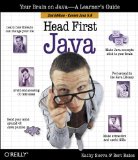
Mini-Review: Head First Java, 2nd ed. by Kathy Sierra and Bert Bates
Head First Java, 2nd Edition
Not For Raw Beginners, But Close to It
For an experienced programmer new to Java, it can be used to learn enough about Java to get a strong basis in the language. It covers a lot of the language, enough to get someone from just starting out to the point where they're capable of carrying on learning with the official documentation or books on specific programming subjects within Java. It starts out at a point that will probably not be basic enough for non-programmers to start learning, but if the non-programmer has a mentor, or another book specifically intended for non-programmers, it will make an excellent supplement.
The Best
The most valuable parts of the book are the places where it takes concepts of object oriented programming, design patterns, and how Java works and breaks them down into bite-size pieces for the reader. It uses a number of different approaches for explaining the concepts it
covers, so the material is varied enough that it doesn't get stale with reading.
Fun Exercises
It also includes a variety of exercises so that the reader can test their knowledge. Since these take the form of puzzles, it makes it easier and more fun to do them than the standard numbered list of exercises at the end of a chapter that you get in most textbooks.
Planned Obsolescence
The book has its shortcomings, of course. One thing that I found annoying was that many of the programming examples started out flawed, purposefully, to illustrate points of features of the language. In some cases this worked, but in others the shortcomings of the initial flawed solution were so obvious at the outset that it was frustrating to keep following along with the text (even for beginners, not just for me.) In other cases, too much space was given to the bad solution before the shortcomings were described and a better approach was taken.
OO Jingoism
Also, the attempts at explaining the advantages of object oriented programming versus procedural programming are strained, and somewhat unclear in the later stages. Realistically, this is a hard argument to make since the difference between good procedural programming and object oriented programming is diminishingly small. Likewise, many procedural languages have many of the features of object-oriented languages. At any rate, the point seems somewhat forced and belabored in this book.
Clarification Unclear
Another fault is that some of the exercises are unclear as to what is expected in the way of answers. The student is left to flounder, and what looks like an attractive and fun puzzle turns into a source of frustration. In these (infrequent) instances it's best to just move on.
Artistic Annoyances
The art also falls short in places. It falls just short of being sufficiently varied. The faux-retro look slips in some places. There are thought balloons in places where speech balloons belong. These are minor niggles, but they add an edge of abrasiveness to the book and its style, particularly in the latter portions of the book.
Final Grade: 93/100, A
The book's flaws are minor in comparison to its strengths. It's a book I can heartily recommend to someone learning Java. It is usable either as a main text, or as a supplemental book where you can read clearer and more verbose descriptions of what's going on when something about Java leaves you wondering what the heck is going on.
Pros:
- Easy to read.
- Excellent clarifications of many concepts.
- Fun exercises.
Cons:
- Some presentations follow poorly laid 'false trails.'
- Some exercises unclear.
- Some art needs a tune-up.
Recommendation:
Buy, either for a main learning book (for experienced programmers), supplemental book (newbies or experienced), or as a backup reference for Java concepts (it's a must-have for this).
2010; Edited to Add:
This book is still one of the best out there. It's starting to get a little outdated. I can only hope that O'Reilly decides to fill a couple of trucks with cash and back them up to the homes of Kathy and Bert to induce them to produce an update for this book. It would be a shame to see such a useful and valuable book be lost due to the ongoing changes in Java.
There are other Java resources that have developed in the meanwhile, but none really take the place of this book.
Labels:
Book Review,
Java,
Programming
Subscribe to:
Posts (Atom)